

Beyond Venice: Of Caranto, Refosco and Friulano in the Lison DOCG

 Venice doesn’t really need embellishment. Its improbable persistence is something of a miracle–a city where practical daily solutions overlap with ghosts of grandeur and the slow drama of weathered stone. Could grey-skied storms and shocking yellow sun be as beautiful anywhere else? And like any center of wealth, the legacy of empire is complicated. The Gothic arches, Istrian marble and colorful stucco are the frosting on a complex Renaissance cake built on trade–all kinds of trade. Ancient Rome thrived on the mainland long before the Republic, and later Venice held a Western monopoly on just about all things ranging from salt, cutting-edge glassmaking, and even local crops with a similar ruthless efficiency. Through the prism of wine we can revisit the Rialto market today and imagine the echoes of a bustling wine crossroads, a pioneering Berry Bros. & Rudd, where wine both foreign and domestic changed hands alongside fish, silk and spices. The lagoon was porous in a sense, and everything passed through. |
But there is another Veneto, quieter and less known, hiding in plain sight just northeast of the city. It surfaced unexpectedly while studying for the International Wine Guild's Italian Wine Scholar program. The Veneto chapter prompted a recurring conceptual hiccup. This is the most productive wine region in all of Italy, yielding nearly 35% of the country's prestigious DOC/G output—no small feat. Between the vast commercial sea of Prosecco, workmanlike Pinot Grigio, and the celebrated heights of Amarone, another world of wines quietly reached back even farther, a mixture of native and imported grapes that assumed their own top-shelf status, if you could find them. More puzzling still: how could Merlot be the Veneto’s dominant red variety in a region famous for Valpolicella wines? And why did the zone north and east of Venice read on the wine map less like the Veneto and more like an extension of Friuli—a quiet, unfamiliar identity folded into a region the world already thought it knew? |
 A few answers unfolded when I had the chance to visit Villa Bogdano 1880 winery outside of Portogruaro just 30 miles northeast of Venice. Owner Domenico Veronese, a Portogruaro native who returned home from life abroad to purchase the vineyards, had generously sponsored my participation in the Italian Wine Scholar program mentioned above. I knew we already shared an appreciation for Friulano and Refosco, somewhat obscure wines that I had always associated with Friuli, but I would learn were deeply etched in the history north of the lagoon. I had more questions floating in my head as the train rumbled northeast from the Venice station through damp summer fields of corn and rice. The Dolomites were a dusty shadow to the north while traveling across the immense reach of the Padana Plain, the great agricultural spine running from Piemonte east across northern Italy. Fingers of the Adriatic snaked in every direction, marking old transportation routes, farming borders, and feeding the famous humidity that defines the landscape. It felt similar to the Sacramento Delta’s impressive reach in California, which has its own farming and economic past that can be explored through wine there as well. |
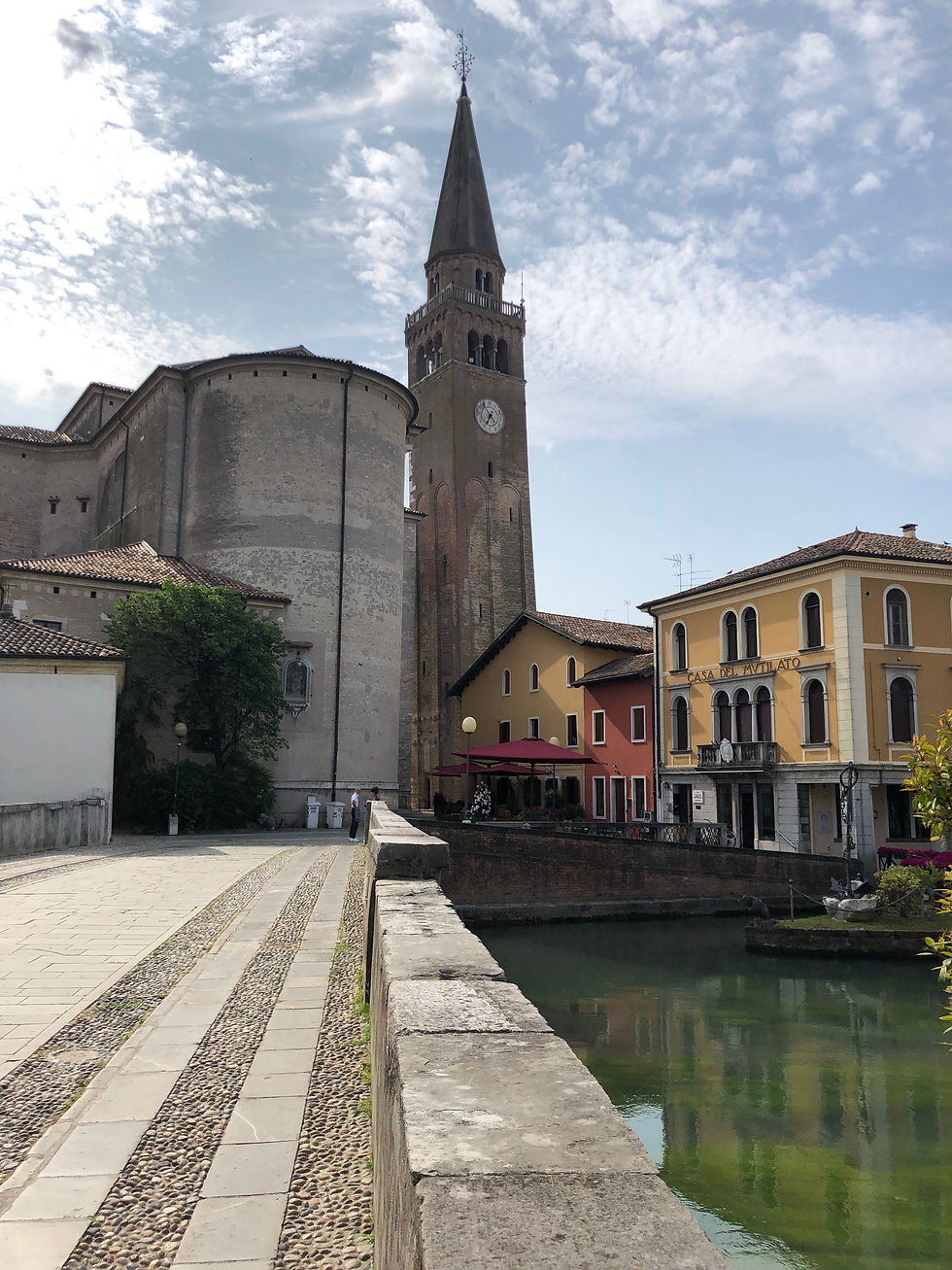
Arriving in Portogruaro it was obvious why it is called “Little Venice.” From the quiet train station it was just a short walk downtown where a perfectly leaning 14th -century campanile rises 194’ over the emerald-green Lemene River lined with unhurried colonnades. Portogruaro held a strategic location for the Romans as well as its own thriving economy–thatlegacy is documented impressively by the National Museum Concordia just steps away. Portogruaro did well under the Venetians too and in the 1400’s was granted privileged status which brought an influx of royal construction, grand churches and the classic covered arcades flanking the streets. Venetian nobles kept summer homes here, with characteristic pointed Islamic arches, frescoes and perfect columns still legible in the stonework. Despite disruptions during Napolean’s occupation and WWI, it was a beautiful place to slow down. Grabbing coffee at a bar, I saw multiple bottles of Friulano and Refosco wine open for service along with ubiquitous white polenta triangles; this was clearly the place. |
But first, we must discuss Italian details. |
 Italian wine is a notoriously complicated business and deep in a maze of designations. In the United States things are simpler and we let regions do all the talking. In Italy it is the type of grape (Dolcetto, Barbera, so on) that determines the possible designations (DOC/G, IGT etc.) that might be used, along with crop load, vinification style, alcohol level, and aging regimen. We refer to the layers of certification as the Italian pyramid: a wide base of general and loose requirements at the bottom, and very specific, rigorous requirements at the top for prestigious DOCG certification. |
Just a few miles outside of Portogruaro, Villa Bogdano 1880’s vineyard sits within five possible designations. The widest and most flexible–the pyramid’s base–is the Veneto IGTwith at least 15 grapes allowed and little in the way of vineyard governance. They are also within the Prosecco DOC for sparkling wines and the Venezia DOC which is largely focused on Pinot Grigio. Moving up the pyramid we have the Lison-Pramaggiore DOCwhich is a more stringent version of the Veneto IGT with tighter production standards across a tiny 430 acres of vineyards. In 2011 the apex of the pyramid became the Lison DOCG,focused solely on the highest-quality Friulano made from a miniscule 109 acres. There is even a more stringent “Classico” covering just 44 acres, into which Villa Bogdano’s finest Friulano falls. The pyramid starts out very wide but is very, very steep at the top. |
We can’t speak of designations without grapes though, unlike in California where only place is certified. In this area of the Veneto, outside of the omnipresent weight of Prosecco and Pinot Grigio, the grapes northeast of Venice are cut from a very different cloth than those on the west side. Enormous Lake Garda, bordering Lombardy, has its own distinguished cast in the Corvina-based blends of Bardolino and Valpolicella, and Garganega-based Soave, but those grapes are nowhere to be found here on the east side. Instead, Friulano (also called Tai locally, while in the US it is still “Tocai Friulano” just to deepen confusion) and Refosco take center stage, alongside, perhaps surprisingly, Merlot. |
 The mystery of Merlot was also top of mind during my visit. All the primary Bordeaux grapes have a surprisingly tenacious hold in northeast Italy, and unlike Tuscany’s relatively new and somewhat self-conscious flirtation with all things Bordelaise, in the Veneto and Friuli the Bordeaux presence goes back at least 150 years, shedding its foreign accent. It is tempting, and perhaps lazy, to say that Napolean brought them, and end the story there. We can also imagine that Bordeaux was fetishized by the Hapsburgian nobles with an eye for prestige. But history is rarely tidy. Merlot probably entered via Friuli to the east, first recorded as “Bordo” in 1855, planted alongside a pre-phylloxera ocean of now-vanished autochthonous souls sadly lost forever. Austrian agriculture was proactively exploratory, and Merlot proved itself by balancing a host of benefits in a plummy and reliable package that awarded its adaptability in this area. |
It is impossible to overstate just how deeply phylloxera reshaped the European wine world, not just creating grape migrations (Cabernets traveling to Spain as French vineyards withered) but as an utter leveling and rebuilding, with different goals and different survivors. Just as Grenache came to dominate the Southern Rhone, Merlot had enough confirmed viticultural merit to thrive and expand in northeastern Italy. It only took one generation for California wine drinkers to assume Cabernet and Chardonnay have always been there, and Merlot had probably deFrenchified itself rapidly into a local grape during changing times. Its merits are real: early ripening, an affinity for clay soils that dominates the area, generous wine with little tannin to manage, and not insignificantly, 300 years of Bordeaux market value. What is not to love? |
 The nebulous Refosco group will receive its own article in due course, but that writeup moves slowly since Refosco genetics are a chaos of parent/child contradictions, the main type (Peduncolo Rosso) may not even be true Refosco, and frankly some wayward souls dislike the wine’s signature bitter note. Saying that it is related to Marzemino offers little help. The Venetian Republic’s documentation of it as “terrano” (from our soil) and five centuries of monastic stewardship speak to a belonging that predates designations. It is another example of the slow osmotic diffusion through temporal borders that characterize so much of the Veneto. Phylloxera intervened here too, and the notorious Peduncolo Rosso type of Refosco might have consolidated its dominance through reliability on the humid plain. The Italian wine industry belated recognition of signature grapes in the 1970’s thankfully wrote Refosco’s importance into the evolving DOC/G system as well, maintaining regionality while not settling swirling ambiguities. |
The story of Friulano is equally interesting and speculative. Those curious enough can read my separate investigation into its earlier migration and California’s own history with it here. Though Friulano is just a minor blending grape in some Veneto areas, only here in the beating heart does it take center stage. |
 These three signature grapes are the core of Villa Bogdano 1880’s production. Their location in the center of the Lison DOCG, straddling both Friuli and Veneto, connects them through time to ancient vineyards and agriculture in this area. While the current buzz tilts toward nervous high-altitude wine from Etna and beyond, Villa Bogdano sits at the polar opposite, at an equally remarkable 18’ of elevation. It is extreme in all the inverse ways. Rather than volcanic rock, here we find shockingly high levels of calcium-streaked clay over a bed of limestone. This is the defining “Argilla” clay topsoil and “Caranto” subsoil of Lison: offering a rare and particular balance of earthen density and critical soil porosity for the vines. The geological legacy of the Gulf of Venice is etched into the profile here, and the property sits between the Lison and Loncon rivers, lending a constant sense of water and earth. Waterlogged roots, persistent high humidity, hot Scirocco and cold Bora winds, the occasional violent storms and disease pressure more reminiscent of Vermont than California, are known challenges. Cover crops may be permanent, canopy work is a daily negotiation to keep the generously water-fed vines in balance. Sylvoz training, which originated in the Veneto, helps control the vigorous vines through downward growth and spread the leaves into something of a tunnel, loosely protecting the grapes within. Downey and powdery mildew along with botrytis are constant concerns, especially with thin-skinned Friulano. Remarkably, Villa Bogdano’s vineyard has been certified organic since 1993 despite plenty of pressure to do otherwise, resulting sometimes in painful crop losses but expertise in management, and a clear statement of conviction. |
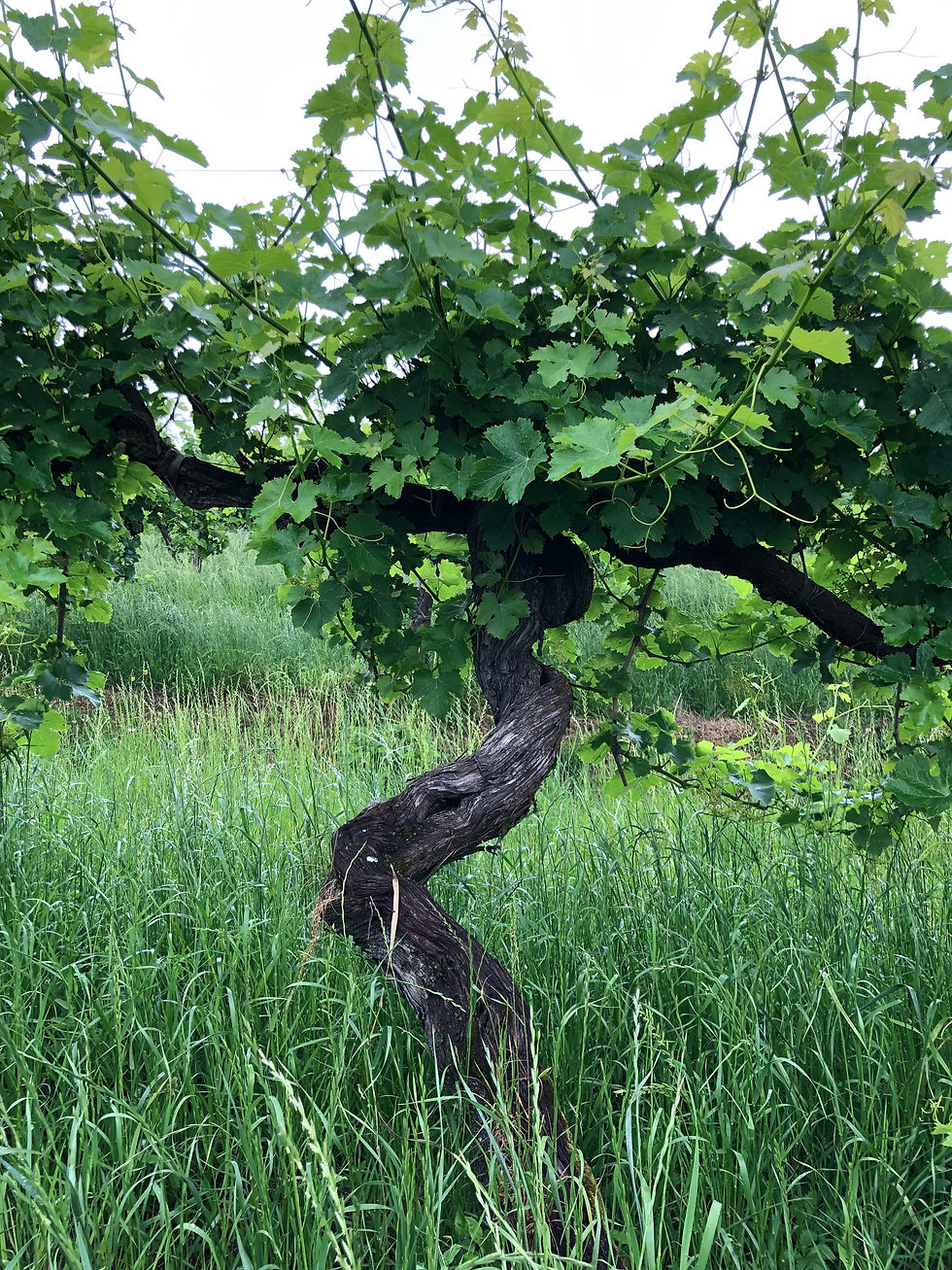 I was most excited to visit their forty-five acres of old vine Friulano, Merlot, and Refosco, and to share their pride in 117 vines of Friulano planted in 1896 that are still trained on the “Cassone Padavano” system developed by Benedictine monks. These old vines are rich in epigenetic legacy and disease resistance, and they are working with consultants to repropagate the old vines, planting new blocks from the old budwood and training them in the old ways, thereby passing the baton through time. Wildlife preservation zones, insectaries and thirty acres of medieval woodland fold into the vineyard, increasing biodiversity and the hope for a resilient and self-sustaining habitat for all. |
Villa Bogdano conscientiously threads their needle by focusing on traditional grapes (along with a little Chardonnay, Cabernet Sauvignon, etc.) while using the past as a way forward, just like my question of persistence and change. Many traditional elements are at play in the largely solar-powered winery: cement tanks and large 45hl wooden botti (20 times the size of a normal oak barrel) that are used extensively for aging without impinging on the wine. But they aren’t afraid to cautiously employ a few French barrels, use cryo-maceration (freezing) of white grapes to liberate more aromatic compounds, or employ battonage for roundness and weight. Tradition is, after all, a living thing. |
But what about the wines then? Delicious, showcasing the cultivars perfectly while preserving their idiosyncrasies in this unique place. |
Stylistically, this area is warm enough to fully ripen Merlot and Friulano fruit at a modest 13% of alcohol through steady summer temperatures. The clay soil adds tremendous body and a broad feel to the wines, while the limestone might be the key to keeping them vertical and with enough acid to balance the weight without ever stealing the spotlight. Nothing was overripe, no flab in sight, and it was easy to forget about acidity since it was neither forward nor lacking, allowing the fruit to shine. |
 It was surprising how approachable the wines were, any domestic wine drinker could easily enjoy them, with weight and ripeness without hiding behind oak or high alcohol. Friulano can become a bit heavy and clumsy if left on the vine too long, but the Lison Classico was full of rich yellow fruit and spice that was savory, lively and quite complex while demanding revisits. Their “185” (numbers refer to the vineyard blocks) version of Friulano adds a touch of oak but leans into tropical fruit notes with great ripeness reminding one of Roussanne,confirming that abundant yellow fruit is indeed a classic Friulano profile from the Caranto soil. |
Their “195” Merlot blend was remarkable in how comprehensively it spoke Merlot, with plum and red fruits galore, just a hair of olive and herb and an almost guilty touch of richness. A strategic bit of Cabernet Sauvignon pulls it back from hedonism, propping up the finish with framing tannin and structural resolve. The old vines added an energetic long finish rarely found in Merlot. It wasn’t Right Bank Bordeaux, not Napa jelly donut, not sun-roasted Sierra Foothills olive and pepper, but it quietly referenced all of these points. |
The “186” Refosco hit all of the notes as hoped and was perfect foil to the Merlot. A nose of plum, rock and rusty iron, pepper, pomegranate, flecks of mint and was that coriander? While it smelled generous and round, the palate was properly agitated and alive, earthy with delightful bitter notes and full of peaks and valleys linked by savory blackberries. It was exactly spot-on for more demanding Refosco, which paces about and needs space to wander. |
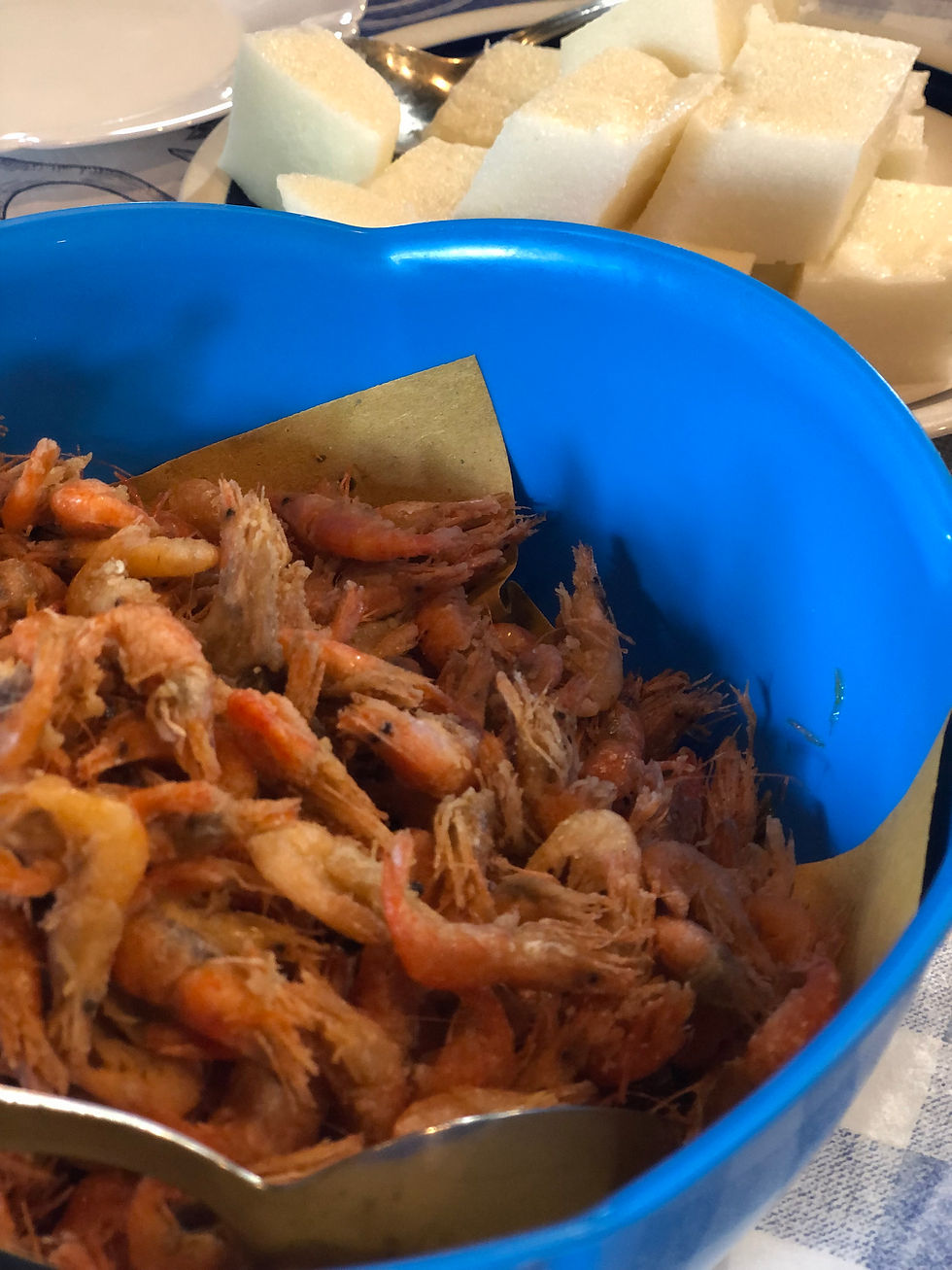 Domenico went further, pouring a Friulano that had serious botrytis from the challenging 2019 vintage–a technical feat for any winery. The metamorphosis moved the wine towards Gewurztraminer expressiveness full of papaya, saffron and almond, somehow still balanced but a completely different beast. It was a wine of circumstance, born of crop loss and head shaking, but a statement of skill and the willingness to follow where the vintage leads. Later that day we feasted on a lunch of fish and tiny shrimp plucked from the waters in a traditional fishermen’s reed-roofed casone, a tradition going back at least 500 years in the lagoon. It was another moment reaching back through time, closing another loop. |
On the train back south, I turned over the visit in my mind. My questions had been answered, but not in the way I wanted. No single document explained why Merlot took root here, and no one untangled the Refosco family tree. Wine revels in this lack of clean edges, which is maddening until you realize that ambiguity is not a failure, but the lesson itself. The lagoon was porous, and everything passed through. That includes uncertainty, but also acceptance. |
What Villa Bogdano 1880 offers is something more interesting than neat and square answers. In reaching back through time–past Venice, past the Austrian Empire, past the Republic, all the way to the Roman artifacts still surfacing in their vineyard soil, we see something more like a living argument. That place matters. That tradition is not only nostalgia but sometimes a struggle for continuity, and it can be self-conscious and considered like French oak or cryo-maceration. Those 130-year-old vines still trained in the Benedictine manner are not curiosities but cornerstones. The wines themselves carry this fingerprint, anchoring modern touches but preserving the old core with quiet insistence. The land there does not forget what the maps have redrawn. The water that shaped the plain, the rivers that feed the Caranto clay still move beneath it all, as they always have. Venice persists against every reasonable expectation. So too do these vines and their wines at eighteen feet above sea level, extreme and unexpected in their own ways, hiding in plain sight, just beyond the crowds. |
 Winemaker Luccio Tessari | Owner Domenico Veronese (photo credit unknown) |


